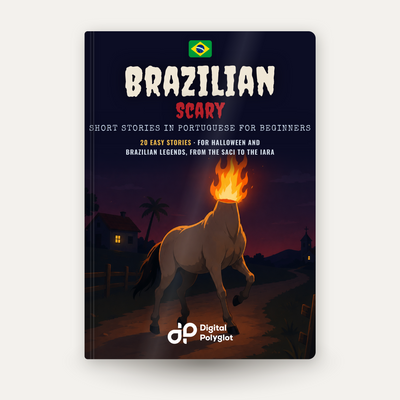
Short Stories

Short Stories in Croatian

€19,99
From a Zagreb terrace on a Saturday morning to a fisherman's boat leaving Komiža before dawn - 20 intermediate stories written in natural Croatian, with regional voices from Dalmatia, Zagreb and Slavonia kept intact. Each chapter includes vocabulary, culture notes and comprehension exercises.
Express checkout
  • Free shipping over €49
  • 30-day returns
  • Physical paperbacks
Benefits

{"type": "root", "children": [{"type": "paragraph", "children": [{"type": "text", "value": "Natural Croatian: stories written the way people actually speak, not the way textbooks flatten it\nRegional Voices: Dalmatian vowel drops, Kajkavian Zagreb, long Slavonian vowels - all preserved\nCultural Context: words like fjaka and pomalo explained through story first, definition second\nStructured Chapters: every one of 20 chapters follows the same shape - story, then 15 vocabulary entries, then comprehension\nManageable Length: each story is short enough to finish over one coffee\nAuthentic Dialogue: conversations that sound like two people talking, not two grammar patterns colliding\nLocation-Rooted: chapters span Zagreb, Dalmatia, Istria, Slavonia and the islands"}]}]}

Product details

{"type": "root", "children": [{"type": "paragraph", "children": [{"type": "text", "value": "Title: Short Stories in Croatian\nSubtitle: Twenty Intermediate Stories from Across Croatia with Vocabulary, Culture and Comprehension Exercises\nChapters: 20\nFormat: Paperback (printed on demand)\nLanguage: Croatian with English vocabulary notes\nAudience: Intermediate Croatian learners"}]}]}

Shipping & returns

Printed on demand and shipped physically. For delivery times, returns and the EU 14-day right of withdrawal, see our store policies.

Format & details

Paperback, A5 format. Printed on demand and shipped physically.

20 Chapters, One Consistent Structure - and Real Croatian Throughout

Short Stories in Croatian mockup

{"type": "root", "children": [{"type": "paragraph", "children": [{"type": "text", "value": "Each of the 20 chapters opens with a short story set in a specific Croatian location - a Zagreb caf\u00e9, an olive grove in Istria, the bell ringers of Kastav, a winter visit to Plitvice. The dialogue is written the way people actually talk: Dalmatian characters drop unstressed vowels and reach for Italian loanwords; Zagreb characters move between Kajkavian at home and standard Croatian at work; Slavonian speech carries long vowels and an obsession with food that shows up in the vocabulary."}]}]}

Short Stories in Croatian mockup

{"type": "root", "children": [{"type": "paragraph", "children": [{"type": "text", "value": "After each story, 15 vocabulary entries break down the words that carry cultural weight - terms like fjaka or pomalo that no single dictionary definition can fully hold. The story lets you feel the word in context first; the vocabulary section then pins down the meaning, register and any regional variation so the entry actually sticks."}]}]}

Short Stories in Croatian mockup

{"type": "root", "children": [{"type": "paragraph", "children": [{"type": "text", "value": "Every chapter closes with comprehension exercises that test whether you followed the plot and absorbed the language - not just whether you can recall a translation. The consistent chapter shape (story \u2192 vocabulary \u2192 exercises) means you always know where you are in the book and can return to any chapter independently without losing the thread."}]}]}

Who This Book Is For

  • {"type": "root", "children": [{"type": "paragraph", "children": [{"type": "text", "value": "Intermediate Croatian learners who have finished a course and want real, unscripted-sounding language to move forward."}]}]}

  • {"type": "root", "children": [{"type": "paragraph", "children": [{"type": "text", "value": "Heritage speakers raised hearing Croatian at home who want to read it confidently and understand regional differences on the page."}]}]}

  • {"type": "root", "children": [{"type": "paragraph", "children": [{"type": "text", "value": "Travelers planning time across multiple Croatian regions who want the cultural and linguistic context before they arrive."}]}]}

About this book

Is this a physical book or a digital download?

{"type": "root", "children": [{"type": "paragraph", "children": [{"type": "text", "value": "This is a paperback, printed on demand and shipped to you physically. There is no PDF, ePub or Kindle version. Because it is printed to order, each copy is made specifically for you rather than taken from a shelf."}]}]}

What level of Croatian do I need before using this book?

{"type": "root", "children": [{"type": "paragraph", "children": [{"type": "text", "value": "The book is written for intermediate learners - readers who already know basic Croatian grammar and common vocabulary but want to move into natural, conversational language. Complete beginners will find the stories challenging without supplementary support. Advanced learners will still find value in the regional dialect content and cultural commentary."}]}]}

How does this book handle Croatia's regional dialects - is it all standard Croatian?

{"type": "root", "children": [{"type": "paragraph", "children": [{"type": "text", "value": "No. One of the deliberate choices in this book is that regional voices are not flattened into a single standard. Dalmatian characters speak with dropped unstressed vowels and Italian loanwords. Zagreb characters mix Kajkavian and standard Croatian. Slavonian speech has its own rhythm and food-heavy vocabulary. Where dialect features appear, they are explained so you understand both what was said and why it sounds the way it does."}]}]}

Do I need to read the chapters in order?

{"type": "root", "children": [{"type": "paragraph", "children": [{"type": "text", "value": "It reads best in order, because the twenty stories travel the length of Croatia and the vocabulary grows from chapter to chapter. You can dip into a single story on its own, but reading start to finish is how the book is meant to work."}]}]}

Quick answers

Need anything else? Email support@digitalpolyglot.com.

Where do you ship?

We ship physical books to the EU, the UK, the US, Canada, Australia and many other regions. Shipping costs are calculated at checkout based on your destination.

How long does shipping take?

Typical delivery: UK 7-8 business days, US and Germany 12-16, more remote regions longer.

Where are orders printed?

Print-on-demand from a global network of facilities across Europe, North America, the UK and Australia. Routed to the facility closest to you.
Customer Reviews

Be the first to write a review
0%
(0)
0%
(0)
0%
(0)
0%
(0)
0%
(0)